
Civilisational Foundations for Modern Organisational Wisdom

Introduction
Kemet — the ancient civilisation known today as Egypt — was not merely a territorial state arranged along the Nile Valley. It was a deeply structured civilisational system integrating ecology, governance, ethics, knowledge, and symbolic order into a coherent institutional architecture. Its endurance across more than three millennia was not accidental. It was structural.
This paper approaches Kemet not as romantic antiquity, but as a disciplined civilisational archive whose historical formation, philosophical architecture, and institutional logic offer enduring insights for contemporary organisational design. The analysis proceeds through four interlocking dimensions:
- The historical formation of Kemet before and during kingship
- The philosophical architecture of Maat
- The institutional logic of the Netjeru and knowledge systems
- The translation of these principles into modern organisational ethics
The objective is not nostalgic retrieval. It is structural interpretation — extracting durable design principles relevant to ethical statecraft, institutional resilience, and organisational coherence in the twenty-first century.
I. Kemet as Historical Formation: Before and Beyond Kingship
The name Kemet (km.t), conventionally translated as “the Black Land”, referred to the fertile alluvial soil of the Nile Valley in contrast to the surrounding desert — deshret, the Red Land. The designation was ecological before it was political. It reflected a people whose identity was grounded in environmental intelligence: the disciplined management of flood cycles, soil regeneration, agricultural planning, labour coordination, and calendrical precision.
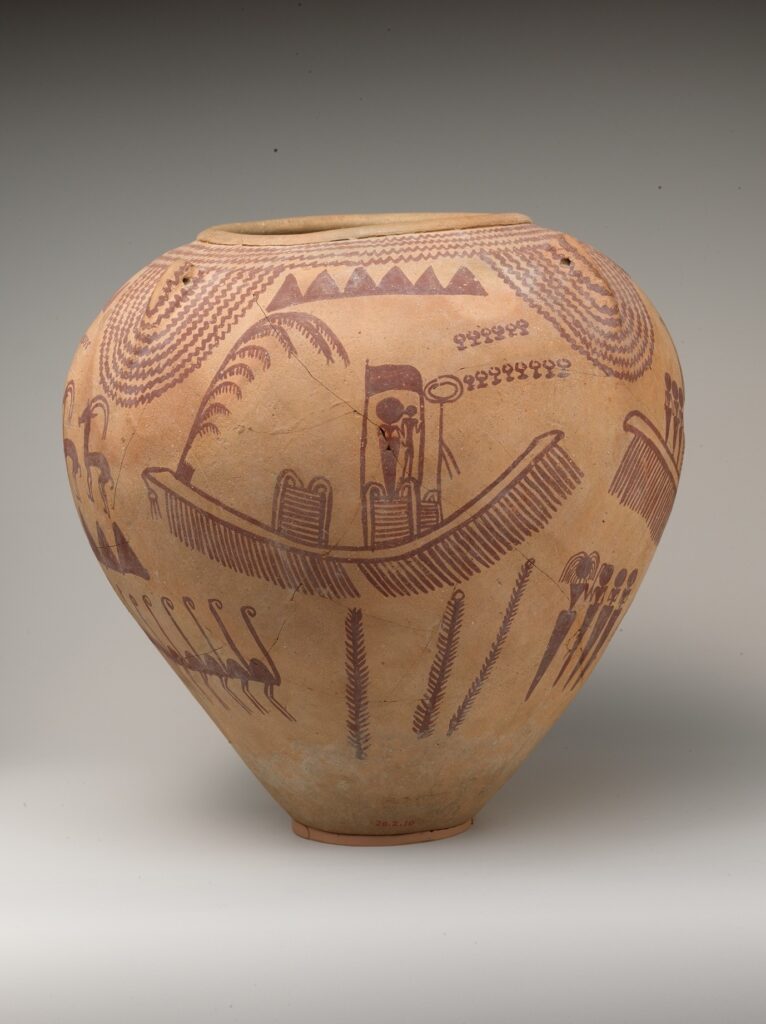
Archaeological evidence from the Predynastic period (c. 4000–3100 BCE) confirms that organised communities, agricultural systems, craft specialisation, trade networks, and symbolic coherence existed long before centralised kingship emerged. Excavations at Hierakonpolis and Naqada demonstrate early administrative differentiation and ritual integration. Comprehensive archaeological syntheses such as those by Toby Wilkinson and Barry J. Kemp document the gradual consolidation of political authority from already complex social systems rather than from institutional vacuum.¹ ²
This distinction is critical.
The principle later articulated as Maat did not originate with the Pharaoh. Kingship developed as an institutional mechanism for safeguarding an already existing cosmological and social order. As the eminent Egyptologist Jan Assmannhas demonstrated, Egyptian kingship functioned as a theological-political office defined not primarily by domination, but by custodianship of order.³
Authority did not create order; it assumed responsibility for maintaining it.
For contemporary institutional thinking, the implication is decisive. Order precedes authority. Legitimate authority derives its credibility from its capacity to sustain equilibrium within an already structured ethical and procedural framework.
Organisations that invert this sequence — constructing authority without prior normative coherence — generate instability. Kemet offers a corrective: authority must be anchored in structure.
II. Maat: The Architecture of Ethical Order
At the philosophical centre of Kemetic civilisation lies Maat — a concept encompassing truth, justice, balance, reciprocity, legitimacy, and cosmic harmony. It was neither abstract metaphysics nor rhetorical morality. It was an operational principle embedded in governance and daily life.
Maat functioned simultaneously across four interdependent domains:
- Cosmic — the intelligible stability of the universe
- Ecological — harmony between human activity and natural cycles
- Political — just governance and legitimate authority
- Personal — ethical conduct and moral accountability
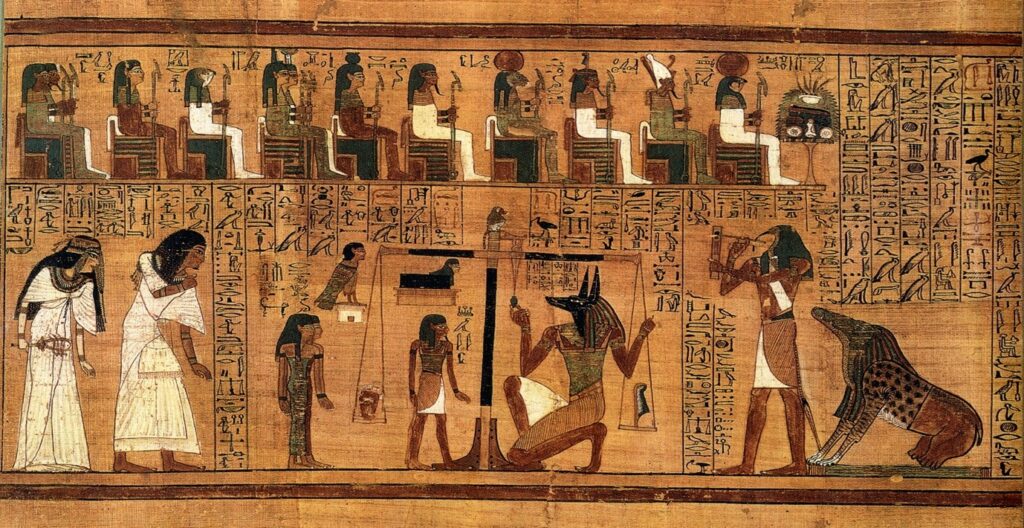
The celebrated “Weighing of the Heart” scene, preserved in funerary papyri such as the Papyrus of Ani, symbolises this integration. Individual conduct was measured against the feather of Maat. Moral life, governance, ecological order, and cosmic stability were inseparable.
Scholars including Erik Hornung and Emily Teeter have shown that Maat was institutionalised through ritual performance, judicial procedure, administrative documentation, and statecraft.⁴ ⁵ It was not merely proclaimed; it was embedded in bureaucratic design.
For modern organisations, Maat translates into systemic commitments:
- Structural integrity rather than performative values
- Procedural fairness rather than discretionary arbitrariness
- Balanced power rather than unchecked concentration
- Long-term equilibrium rather than short-term optimisation
Maat is therefore best understood as a systems principle. It insists that institutions harmonise authority, accountability, ecology, and ethics within a coherent architecture.
In a contemporary landscape marked by governance volatility, regulatory fragility, and erosion of public trust, the structural logic of Maat regains urgency.
III. The Netjeru: Structured Pluralism and Functional Differentiation
The Netjeru (nṯrw), often translated as “gods”, are more accurately understood as differentiated functional principles operating within a unified cosmology. They represent specialised dimensions of reality functioning under the overarching ethical architecture of Maat.
Examples include:
- Thoth — wisdom, writing, rational ordering
- Sekhmet — disciplined force, protection, corrective power
- Ptah — conceptual design, architectural creation
- Isis — restoration, relational intelligence, continuity
These were not chaotic rivals for supremacy. They constituted differentiated competencies within coherent order.
The institutional analogy is profound.
The Netjeru model reflects structured pluralism — distinct functions operating within shared ethical coherence. Diversity without fragmentation. Specialisation without disorder.
Modern organisations frequently struggle with precisely this tension: how to maintain differentiated expertise without losing unity of purpose. The Kemetic template suggests that coherence must be philosophical before it becomes operational.
For a contemporary advisory institution, the translation is clear:
- Mediation and arbitration — restoring balance where equilibrium has been disrupted
- Research and publication — stewardship of structured knowledge
- Strategic planning — architectural foresight and systemic design
- Advocacy and negotiation — protective intervention within legitimate boundaries
Functional differentiation becomes strategic advantage only when governed by shared normative architecture.
IV. The Intellectual Tradition: Knowledge as Institutional Power
Kemetic civilisation developed one of the most sophisticated knowledge infrastructures of the ancient world. Scribes were not clerical auxiliaries; they were custodians of continuity. Education was institutionalised, selective, and integrated into governance.
Knowledge in Kemet was:
- Archived
- Standardised
- Transmitted
- Ritualised
- Applied
Administrative papyri, legal records, agricultural accounts, architectural plans, and theological texts reveal an advanced culture of documentation and preservation. Institutional memory was engineered.
Scholars such as Asa Hilliard III argued that Nile Valley pedagogical traditions influenced later educational systems.⁶ Meanwhile, Martin Bernal, in Black Athena, advanced influential arguments regarding African contributions to Mediterranean intellectual formation.⁷ While aspects of Bernal’s thesis remain debated, the sophistication of Kemetic administrative and educational systems is beyond dispute.
The lesson for contemporary institutional practice is operational:
Knowledge must be systematised, not improvised.
Evidence-based analysis, disciplined documentation, structured archiving, and strategic synthesis are prerequisites for organisational durability. Institutions that fail to codify learning become fragile; those that invest in knowledge architecture become resilient.
Institutional memory is not nostalgia. It is strategic infrastructure.
V. From Civilisational Memory to Modern Institutional Practice
The invocation of Kemet in contemporary organisational work is therefore not aesthetic branding. It signals methodological posture.
From the ecological intelligence of the Black Land, we derive:
Contextual rootedness — solutions grounded in socio-economic and political realities rather than imported abstractions.
From Maat, we derive:
Ethical equilibrium — commitment to legitimacy, fairness, proportionality, and durable institutional balance.
From the Netjeru, we derive:
Structured functional specialisation — differentiated expertise unified by coherent principle.
From the intellectual tradition, we derive:
Disciplined knowledge systems — rigorous research, documentation, and transmission.
Together these form an integrated architecture of organisational wisdom.
This architecture rejects romantic primitivism and technocratic short-termism alike. It recognises that enduring institutions require ecological awareness, ethical design, functional clarity, and disciplined knowledge stewardship.
Conclusion: Kemet as Civilisational Blueprint
Kemet stands not merely as ancient memory, but as a model of systemic integration. It fused ecology, governance, ethics, knowledge, and symbolic meaning into a coherent whole capable of extraordinary longevity.
Its endurance was not accidental. It was structural.
To invoke Kemet in modern institutional practice is to signal:
- Seriousness of design
- Ethical intentionality
- Historical consciousness
- Commitment to resilient systems
In an era marked by fragmentation, acceleration, and institutional fragility, the Kemetic archive offers a disciplined reminder:
Order must be cultivated.
Knowledge must be structured.
Power must be balanced.
Institutions must be worthy of endurance.
This is not nostalgia.
It is architectural memory applied to modern organisational practice.
References
- Toby Wilkinson, The Rise and Fall of Ancient Egypt (London: Bloomsbury, 2010). Publisher: https://www.bloomsbury.com
- Barry J. Kemp, Ancient Egypt: Anatomy of a Civilisation, 2nd ed. (London: Routledge, 2006). https://www.routledge.com
- Jan Assmann, The Mind of Egypt: History and Meaning in the Time of the Pharaohs (New York: Metropolitan Books, 2002). https://us.macmillan.com
- Erik Hornung, Conceptions of God in Ancient Egypt (Ithaca: Cornell University Press, 1982). https://www.cornellpress.cornell.edu
- Emily Teeter, Religion and Ritual in Ancient Egypt (Cambridge: Cambridge University Press, 2011). https://www.cambridge.org
- Asa Hilliard III, SBA: The Reawakening of the African Mind (Gainesville: Makare Publishing, 1997).
- Martin Bernal, Black Athena: The Afroasiatic Roots of Classical Civilization, Vol. I (New Brunswick: Rutgers University Press, 1987). https://www.rutgersuniversitypress.org
KemetK — Applying Civilisational Memory to Institutional Design